Clydesdale
Equus caballus
Large Scottish draft breed known for feathered legs and a high-stepping action. Registered by the Clydesdale Horse Society of North America. Iconic in parades and show hitch classes.
Breed reference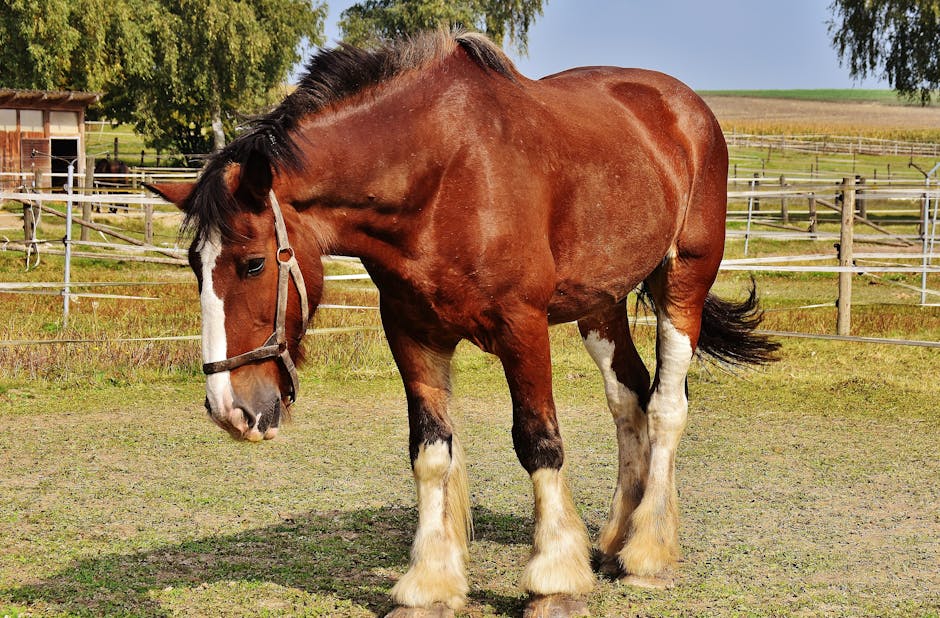
The shape of the breed,
in plain English.
Large Scottish draft breed known for feathered legs and a high-stepping action. Registered by the Clydesdale Horse Society of North America. Iconic in parades and show hitch classes.
Owner-experience
across 7 dimensions.
Each bar is a 1 to 5 score from breed-knowledgeable owners. Read the bar labels for the trade-off the dimension captures.
Temperament
Temperament (cold to hot)
Cold blood. Placid, slow to react, suitable for draft work and beginners.Hot blood. Sensitive, quick-reacting, requires experienced handling.
Trainability
Slow to learn. Requires patient repetition.Quick learner. Picks up new cues in few repetitions and retains training.
Energy / Forwardness
Laid back. Requires driving aids to maintain pace.Forward. Volunteers movement; rider modulates pace down rather than up.
Spookiness
Steady. Tolerates novel stimuli with minimal reaction.Reactive. Startles easily; requires desensitization training.
Coat and maintenance
Handler experience required
Beginner-suitable. Forgiving of inexperienced handling.Experienced handler required. Sensitivity, size, or reactivity demands skilled handling.
Sociability with herd
Solitary tendency. May struggle in mixed-herd turnout.Strong herd bond. Thrives in group turnout with appropriate hierarchy.
Hardiness / Easy keeper
Hard keeper. Requires careful diet and condition monitoring.Easy keeper. Maintains body condition on minimal feed; weight management often more concern than weight gain.
Heritable traits
in Clydesdale.
Each row is one heritable trait. The frequency label tells you how often it appears across the breed.
Looking for a clydesdale breeder?
Be among the first Clydesdale breeders listed on Breed Ledger. Free for the first 10 animals.